Case Study
Index is a fictional catalog of independently designed objects. The concept turns a broad product archive into a browsing experience for people who have a preference or a need, but no specific item in mind.
Company
Index
Role
Product Designer
Year
2026

- Project
- Fictional interface concept
- Challenge
- An editorial catalog that connects inspiration, practical filters, and personal collections.
- Focus
- Information architecture, interaction design, and interface design
- Status
- Concept prototype; no production metrics claimed
The challenge
A large catalog can offer plenty of choice while providing little direction. An alphabetical list favors familiar names, and an extensive filter panel asks people to define their needs before they have explored the range. The design needs to support both curiosity and a clear shopping task.
Design approach
The starting view uses curated collections to introduce useful combinations of material, function, and character. Product cards share a predictable structure, while editorial photography provides enough difference to make scanning feel natural. Search remains available for a known object or maker.
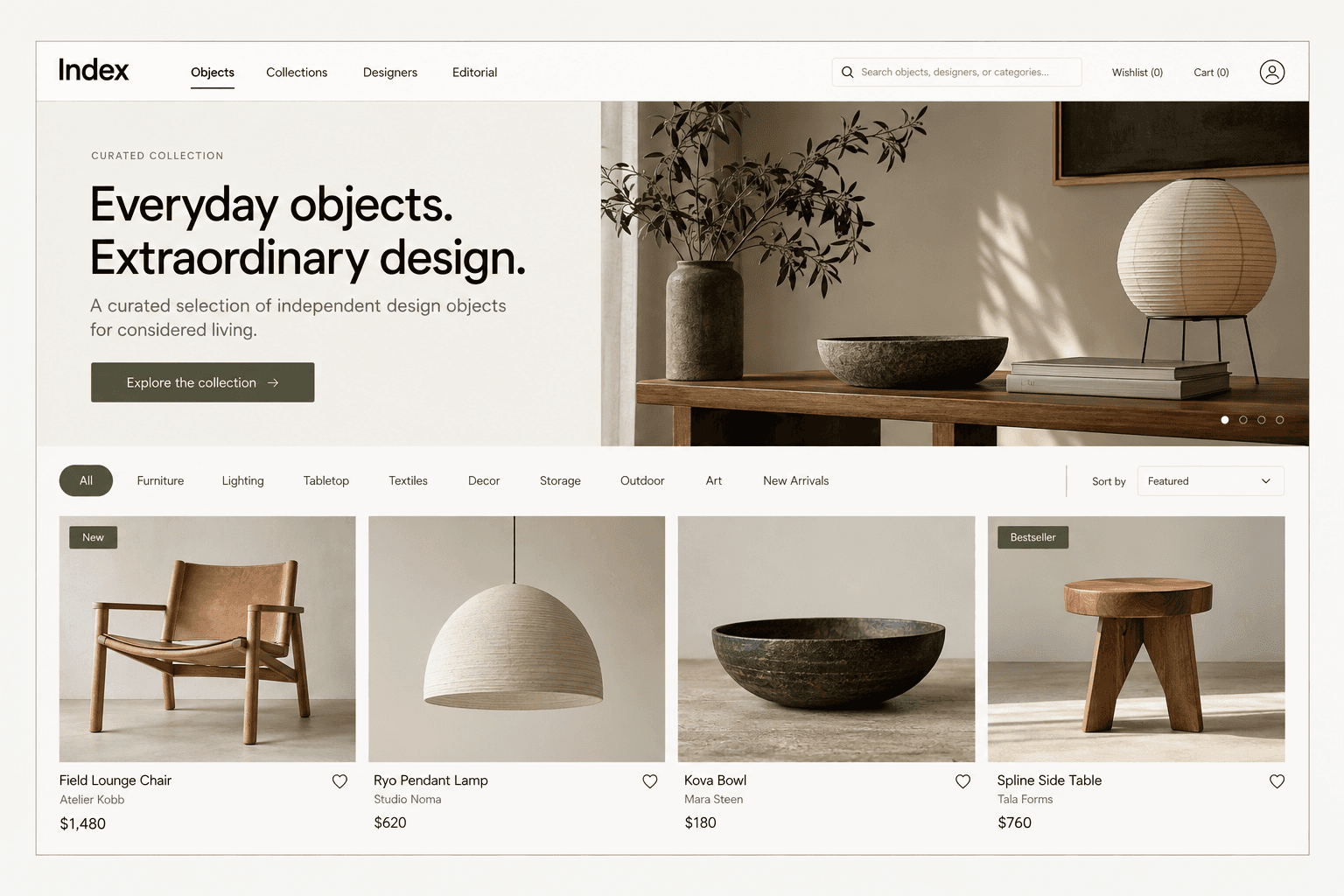
Editorial collections as a starting point
A focused interaction
Filters build on browsing rather than interrupting it. Selected criteria remain visible as removable chips, and the result count explains the effect of each choice. Material, budget, and region can be combined without forcing people into a sequence of unrelated category pages.
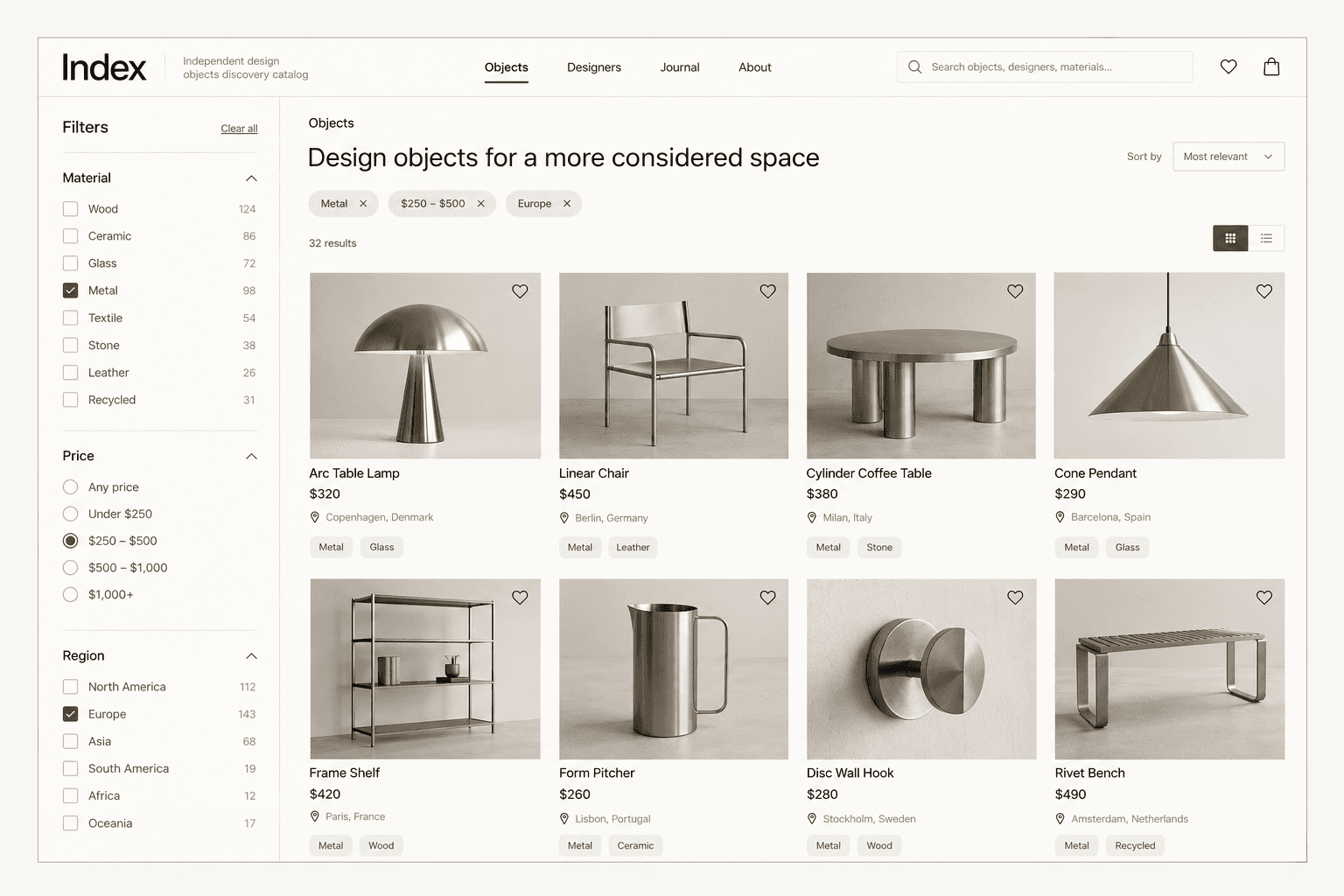
Combinable filters with visible context
The complete experience
Object pages bring photography, dimensions, materials, and maker information into a single reading path. Saving an object adds it to a personal collection without taking the visitor away from the current page. Returning visitors can continue from their collection instead of rebuilding a search.
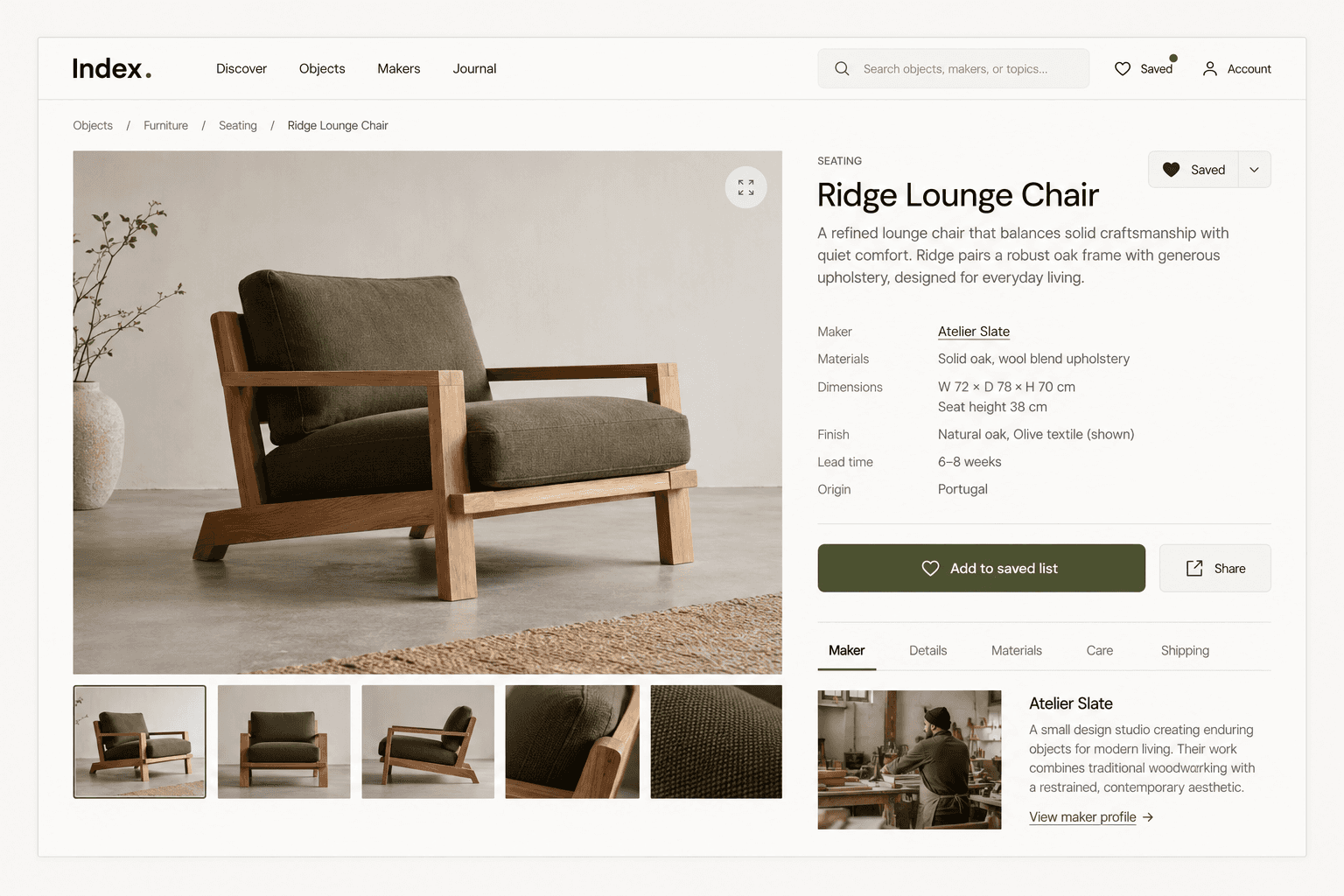
Details that support a considered choice
Concept outcome
The prototype creates a continuous path from an open-ended collection to a considered shortlist. It is a fictional product exploration, with no live conversion or engagement claims. Success would be evaluated through relevant discoveries and the ease of narrowing a collection.
Next iteration
A future study would test whether editorial groupings help first-time visitors express their preferences, and whether the saved collection contains the information needed for a later decision.
Related study