Case Study
Northline is a fictional logistics platform. This concept explores how a shared operations workspace could help dispatchers notice disruptions, understand their context, and coordinate the next action.
Company
Northline
Role
Product Designer
Year
2026

- Project
- Fictional interface concept
- Challenge
- A unified dashboard for shipment monitoring, exception handling, and dispatch planning.
- Focus
- Information architecture, interaction design, and interface design
- Status
- Concept prototype; no production metrics claimed
The challenge
Dispatchers work across shipment lists, messages, and planning tools. A late delivery is easy to notice but harder to investigate: the reason, responsible person, and latest decision often live in different places. The concept brings that information into one operational view.
Design approach
I organized the experience around three questions: what needs attention, what has changed, and who can act. The overview separates routine movement from exceptions. A consistent shipment row makes status, destination, owner, and expected arrival easy to compare without opening every record.
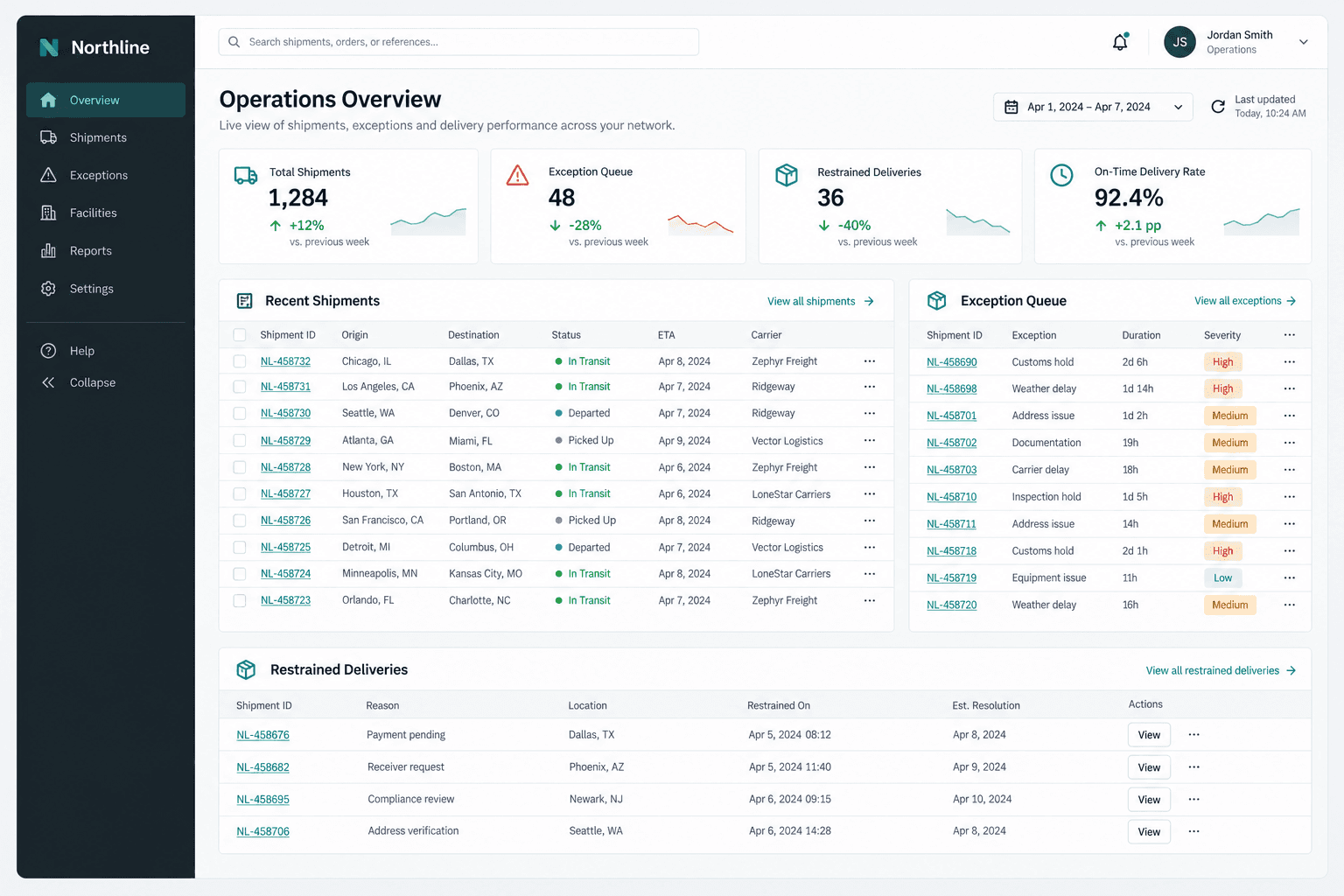
An overview organized around exceptions
A focused interaction
An exception opens a focused detail workspace rather than another dashboard. A chronological timeline explains the disruption, while supporting documents remain alongside the conversation. The primary action changes with the situation, helping the dispatcher resolve the next decision without losing the shipment context.
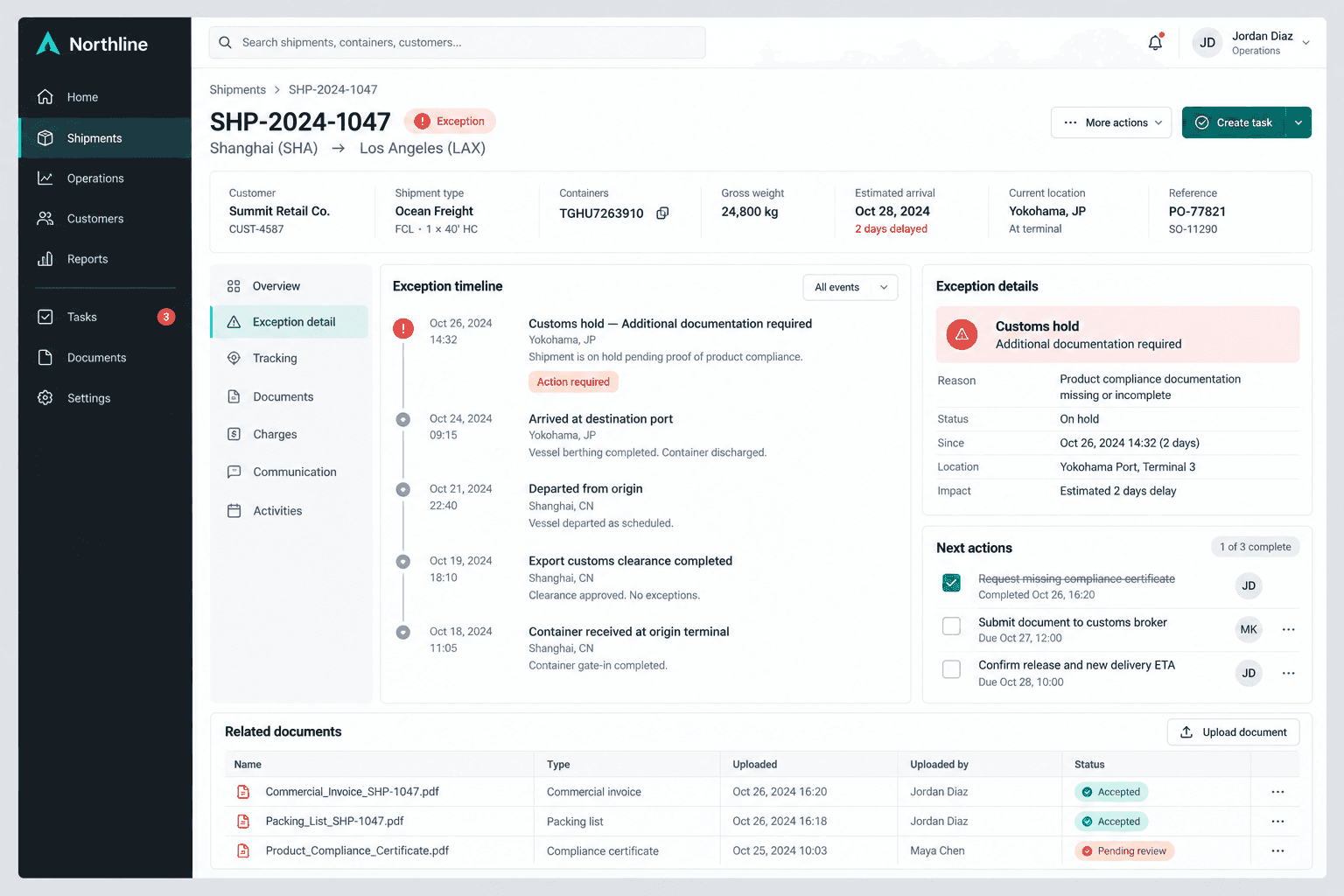
Shipment context and the next decision
The complete experience
The dispatch view connects routes with available capacity and assigned teams. Assignments stay visible as plans change, and a compact activity trail records the reasoning behind each update. Quiet default states leave room for urgent information to stand out when necessary.
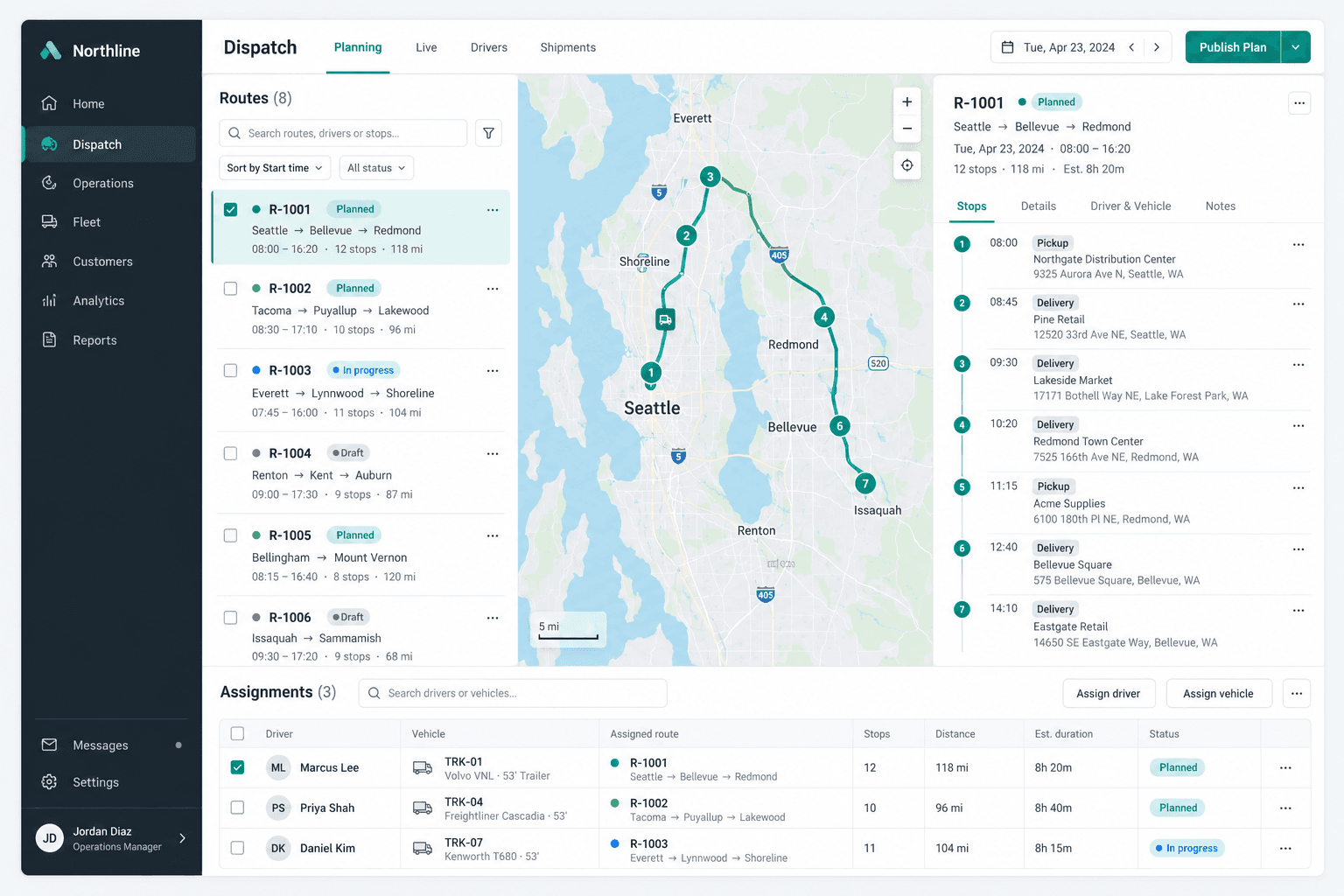
Planning routes and shared responsibilities
Concept outcome
The final concept connects monitoring, investigation, and planning through a shared information model. Its intended benefit is fewer context switches during daily operations. This is a fictional design study; no production launch or measured business results are claimed.
Next iteration
The next validation step would compare how dispatchers handle a delayed shipment in the existing workflow and in this prototype, focusing on missed information and decision clarity.